




 Support: (949) 888-2600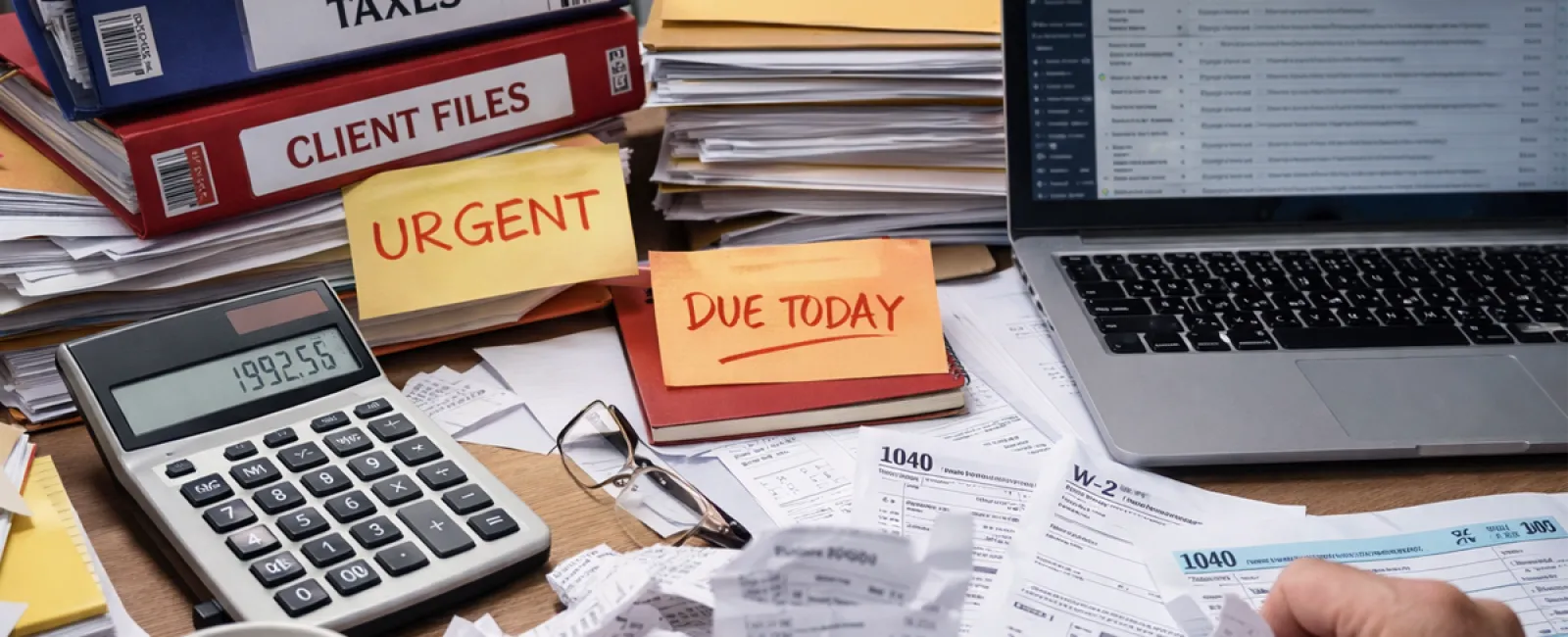
March has arrived.
Your accountant is swamped, your bookkeeper is overwhelmed, deadlines are closing in, and emails are flooding in faster than anyone can manage.
Everyone is heads-down, just trying to survive the busy season.
This is nothing new to you.
But it's not new to cybercriminals either.
Security experts report a dramatic surge in phishing attacks during tax season, with March seeing around a 28% rise in tax-related scam emails compared to slower periods. These scams are subtle — crafted to look like routine business messages right when everyone is stretched thin.
This isn't coincidence.
This is calculated timing.
Let's explore what's coming and how you can protect your business with four simple strategies.
Tax Season Chaos: A Hacker's Playground
What many overlook is this:
Hackers don't only target accounting firms directly.
They exploit the disruption and rush around them.
When tax season hits:
- Clients frantically send sensitive documents
- Staff skip usual checks to keep pace with demand
- Requests like "Just send me the file" replace standard caution
- Verification steps are overlooked because everyone is overwhelmed
The entire workflow accelerates.
And when things move fast, errors creep in.
Hackers don't go after calm, meticulous businesses.
They target the busiest.
March is definitely busy.
Recognizing These Phishing Attacks
This isn't fiction.
These scam emails mimic the legitimate ones you receive daily.
- Emails from "your accountant" requesting a resend of W-2s due to missing files
- Vendor messages claiming changes to bank account details needing updates
- DocuSign notifications asking for urgent signatures on tax documents
- Urgent emails from "your CEO" traveling and requesting immediate assistance
None of these raise immediate red flags.
They appear like typical business communication in March.
That's why these scams succeed.
Why Busy Professionals Fall for Scams
This isn't carelessness.
It's human nature.
When inboxes overflow and deadlines loom, people skim rather than read thoroughly. They make assumptions and react quickly.
Scammers exploit this behavior.
Their emails target people moving too fast to spot subtle inconsistencies. They don't need recklessness — just a busy mindset.
In March, almost everyone fits that profile.
4 Proven Steps to Shield Your Business
The great news is, avoiding becoming a victim doesn't require advanced tools or a dedicated security team.
It just takes consistent habits during hectic seasons.
1. Confirm payment changes by phone
If you receive an email indicating a vendor's banking info has changed, don't just reply.
Call a verified number you already trust and confirm the update directly.
This simple habit stops many of the costliest scams.
2. Pause on urgent sensitive info requests
Urgency should prompt caution, not haste.
If someone demands W-2s, tax forms, or financial documents "immediately," take a moment to double-check.
Legitimate senders understand brief delays; scammers won't tolerate them.
3. Verify "urgent" requests through alternative channels
For any email marked "urgent," confirm through a phone call, text, or internal chat.
This quick step can prevent costly errors before they occur.
Genuine urgency stands up to a two-minute confirmation; fake urgency dissolves.
4. Alert your team to vigilance during tax season
Take a moment this week to remind your team that tax season is a peak time for phishing attacks.
Encourage them to slow down, double-check, and ask questions whenever something seems off.
Empowering your team with this mindset can save hours of cleanup later.
Key Takeaway
Tax season is stressful enough without adding a scam incident to your challenges.
These seasonal attacks aren't particularly sophisticated — just perfectly timed.
They count on rush, assumptions, and everyone pushing through March without pause.
You don't have to overhaul your processes to sidestep these attacks.
Simply slow down and verify when urgency feels forced.
Often, that's all it takes.
Schedule a Quick Safety Review
Your company might already have strong security habits — if so, that's fantastic.
But if tax season tends to make your team scramble or you're unsure how they handle urgent requests, consider a free 15-Minute Discovery Call check-in.
No pressure, no hype — just a clear, practical look at small changes that could avoid big tax season headaches.
If this message doesn't fit your business, please share it with someone who might benefit.
Click here or give us a call at (949) 396-1100 to schedule your free 15-Minute Discovery Call.


