


 Support: (949) 888-2600
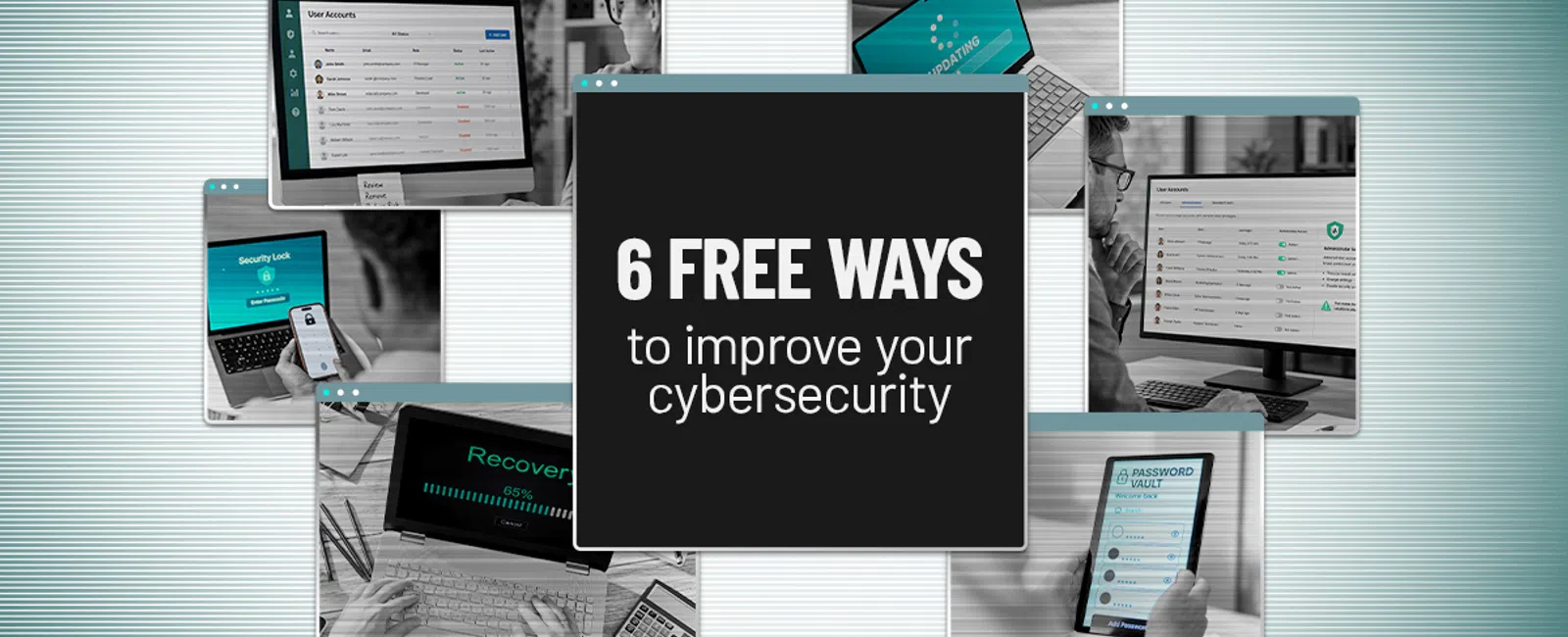
Cybersecurity is often framed as a technology issue, but software alone can't protect your business. In many cases, the biggest exposures come from simple security habits that were skipped, postponed or applied unevenly.
If you want to lower your cyber risk quickly, start with these six practical improvements you can implement this week.
1. Enable multi-factor authentication
If MFA is not turned on yet, make it your first priority. Multi-factor authentication adds another layer of identity verification before someone can access an account or system. Instead of relying on a password or PIN alone, users confirm access with an extra factor such as an SMS code, an authenticator app, a security key or biometric verification like a fingerprint or facial scan.
That extra step makes stolen passwords far less useful to attackers.
Prioritize MFA for:
- Microsoft 365 or Google Workspace
- Banking and payroll tools
- Cloud storage platforms
- VPN access
- Mission-critical business applications
Many platforms include MFA at no additional cost, making it one of the simplest ways to close a major security gap.
2. Delete accounts you no longer need
Former employees, contractors and vendors often leave behind active accounts long after the working relationship ends. These forgotten logins are easy to miss and can give attackers a hidden path into your environment.
Review user access and ask:
- Does this person still work with us?
- Does this account still have a valid business purpose?
- Does this account have more access than it needs?
If the answer to any of these questions is no, reduce permissions or remove the account entirely.
3. Limit administrator privileges
Administrator accounts have powerful control over your systems. They can install software, change settings and disable security tools, which makes them a prime target for cybercriminals.
Review who has elevated access and ask:
- Does this employee truly need admin rights to do the job?
- Is there a lower-level permission set that would work better?
- Should this account still have administrative control?
Remove admin access wherever possible. Applying least-privilege access helps reduce damage if an account is ever compromised.
4. Turn on automatic updates
Attackers often go after software with known vulnerabilities. Updates help patch those weaknesses before they can be exploited.
Make sure automatic updates are enabled for:
- Windows and macOS
- Phones and tablets
- Web browsers
- Microsoft Office
- Antivirus software
- Core business applications
Keeping devices and tools current is one of the fastest ways to reduce avoidable risk.
5. Use a password manager
Strong passwords are important, but expecting employees to remember a unique one for every account is unrealistic.
A password manager makes it easier to:
- Create stronger passwords
- Store them securely
- Avoid password reuse
- Share credentials safely when necessary
When people have fewer passwords to remember, they are less likely to fall back on weak or repeated ones.
6. Test your backups
Backups only matter if you can restore them. If a system fails, a backup that cannot be recovered quickly may not help at all.
Review your backup process and ask:
- When did our last successful backup run?
- Has anyone tested a restore recently?
- How long would recovery take?
A backup protects your business only when it works under pressure.
Small improvements can deliver major protection
Cybersecurity does not have to begin with a large investment. It starts with removing the weak points that create unnecessary exposure.
The six actions in this article help reduce common threats without adding cost.
The real value comes from putting them into action and maintaining them over time. We can help you build a focused security plan that aligns with your team, your systems and your risk profile.
Click here or give us a call at (949) 396-1100 to schedule your free 15-Minute Discovery Call to see where you're exposed and what practical steps to take next.


